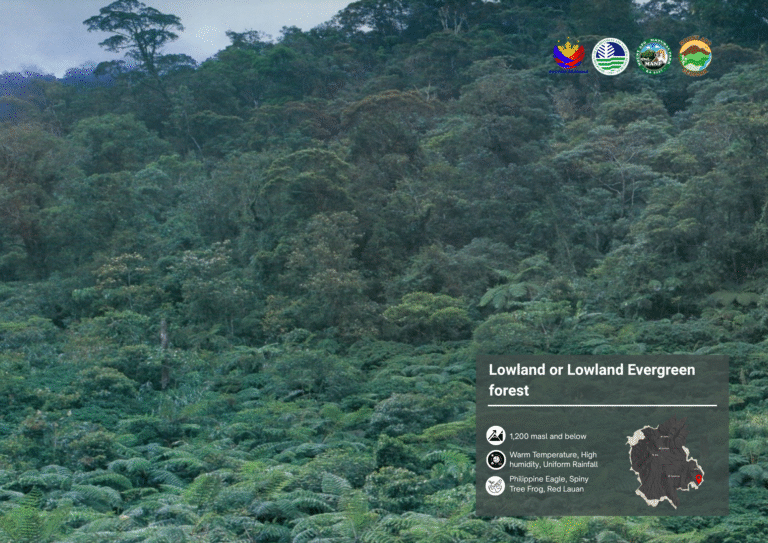
Up to 1,200 masl
Lowland Evergreen Forest
Towering dipterocarp trees like Tanguile and Yakal dominate this zone, providing habitat for the Philippine Eagle and sustaining vital watersheds.
A sanctuary of life
Mt. Apo is a sanctuary of life. Explore the diverse plants, animals, habitats, and ecosystems that thrive across the mountain’s rich and unique environment.
Elevation to summit
Up to 1,200 masl
Towering dipterocarp trees like Tanguile and Yakal dominate this zone, providing habitat for the Philippine Eagle and sustaining vital watersheds.
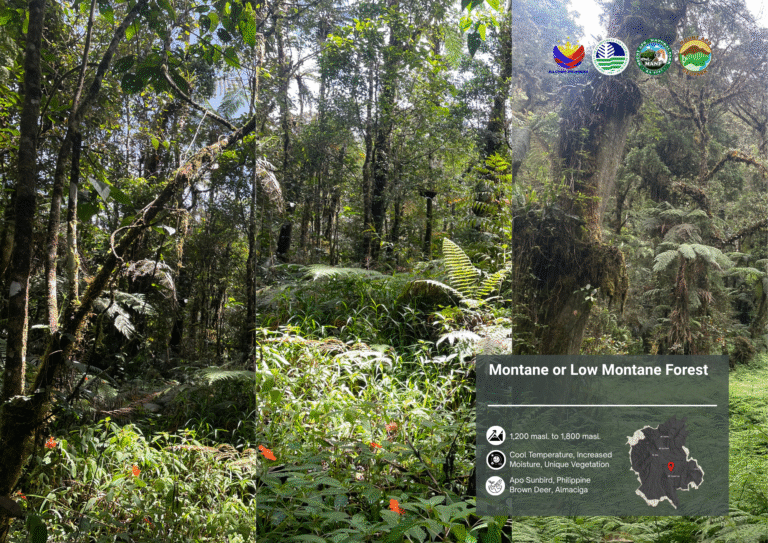
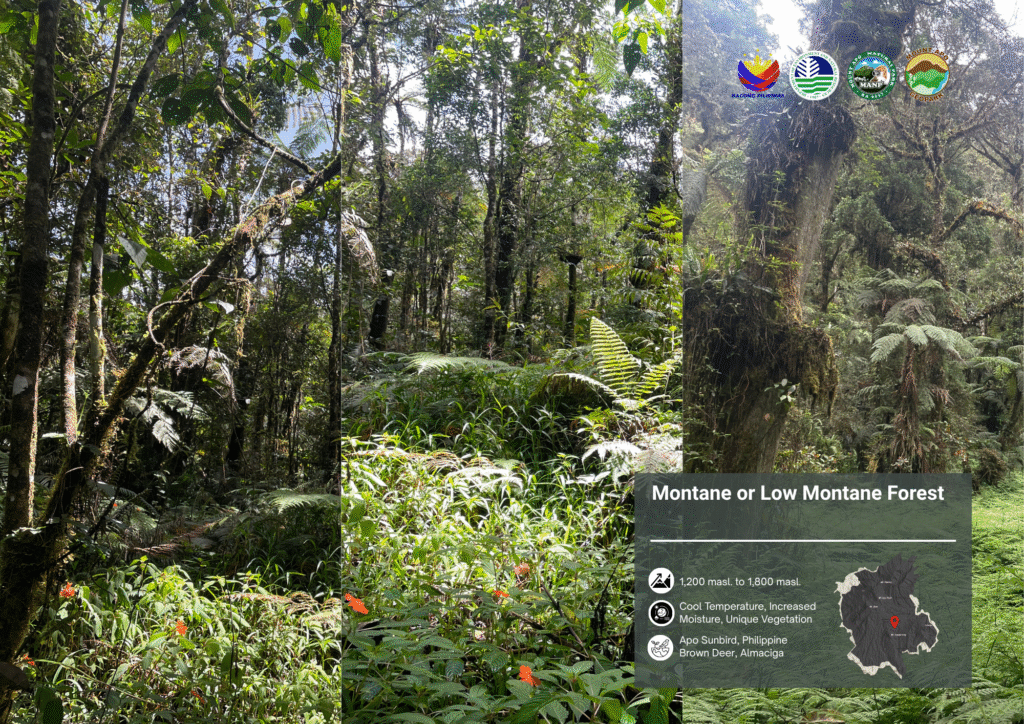
1,200–1,800 masl
The most extensive ecosystem, richly populated with oaks (Lithocarpus), Elaeocarpus, and Syzygium.
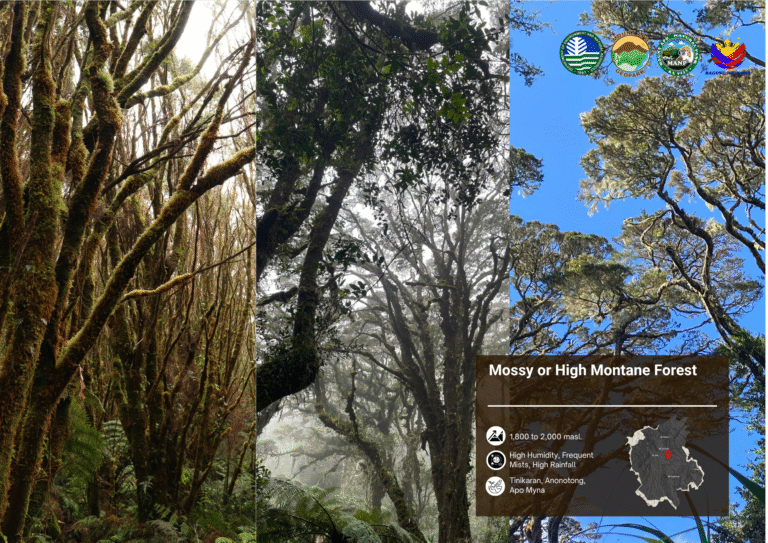
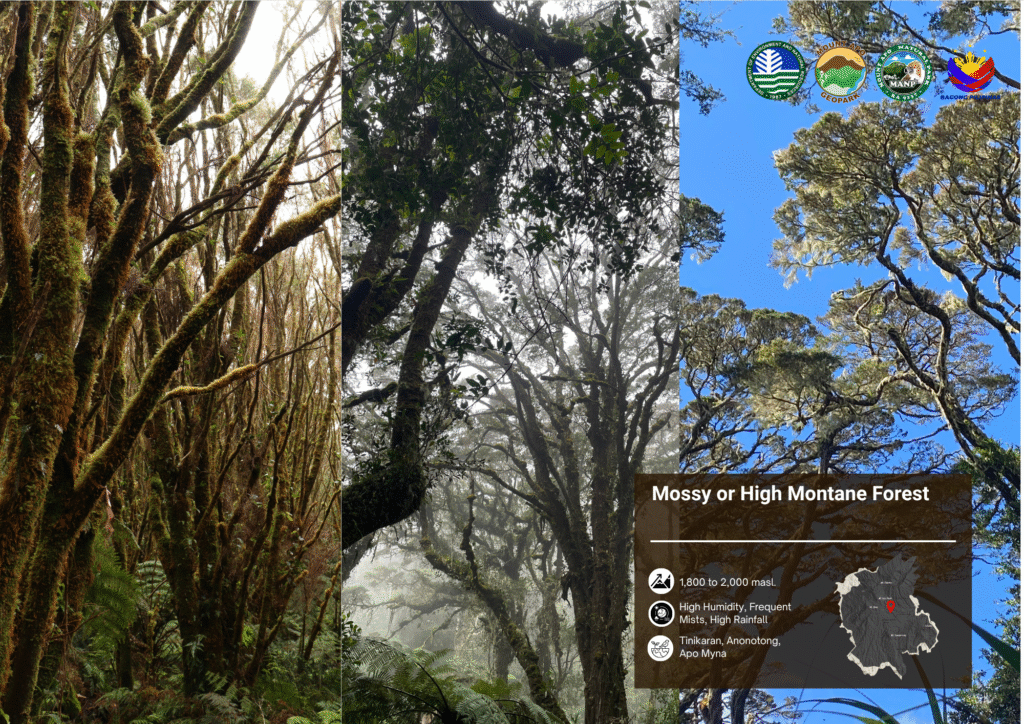
1,800–2,600 masl
Constant rainfall and humidity cloak trees in mosses and lichens, creating a mystical green world.
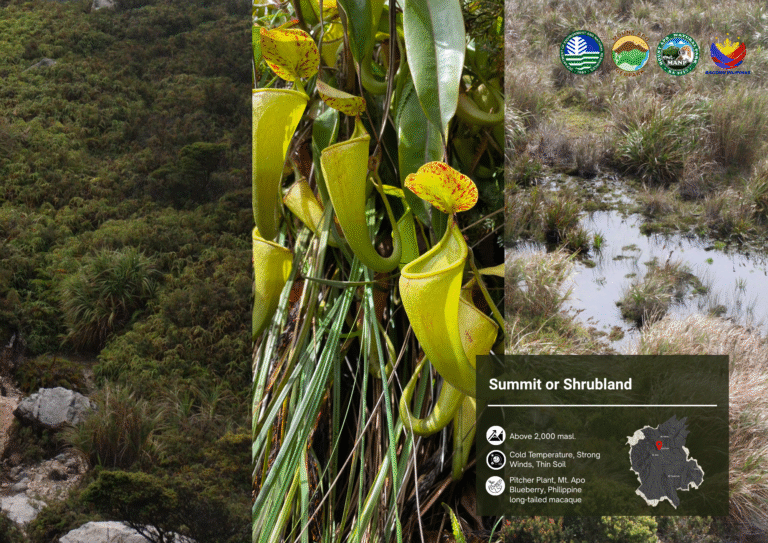
2,600–2,954 masl
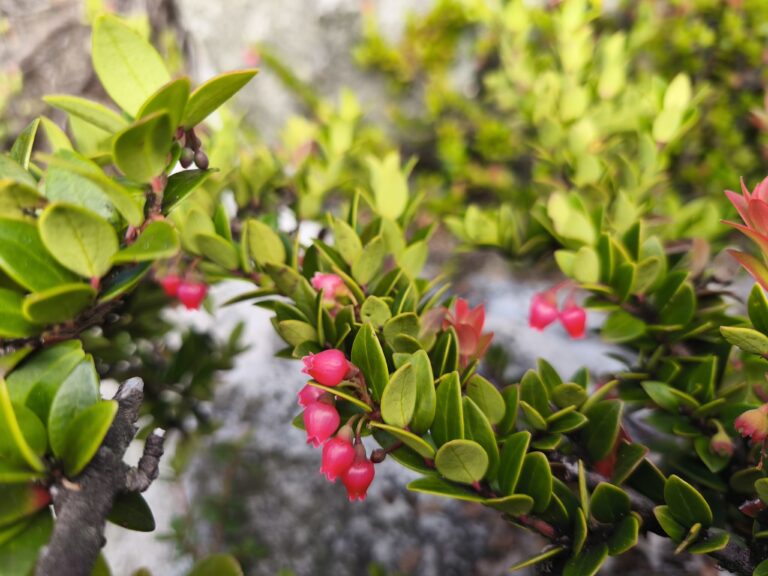
Rugged ridges bloom with Tinikaran, rhododendrons, and wild blueberries, marking the mountain’s crown.
Flora
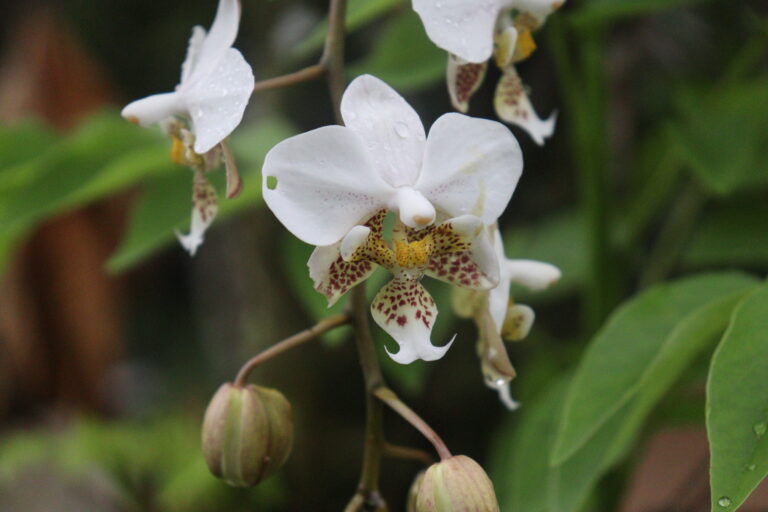
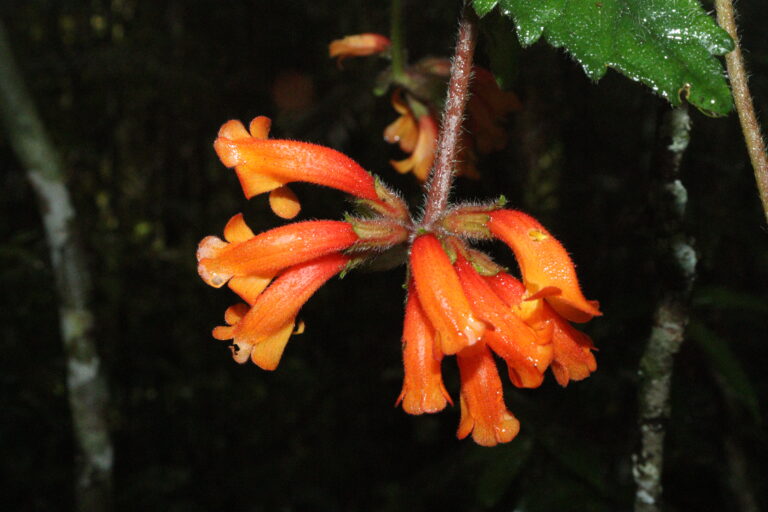
Mt. Apo shelters over 1,000 floral species, including 50 endemic plants found nowhere else. Among them are the delicate Medinilla apoensis, the vibrant Agalmyla calelensis, and the Mt. Apo blueberry Vaccinium fallax. Some species are critically endangered, others vulnerable, and many hold cultural and economic value. Early botanists like Adolph D.E. Elmer described dozens of new plants here in the 1900s, many proudly bearing the epithet apoensis or apoense, and other specific places like todayensis (Todaya), calelanensis (Mt. Kolelan), davaoense/is (Davao), burebidensis (Buribid of Sibulan Range), and baracatanensis (Baracatan, Toril), among others.
Fauna
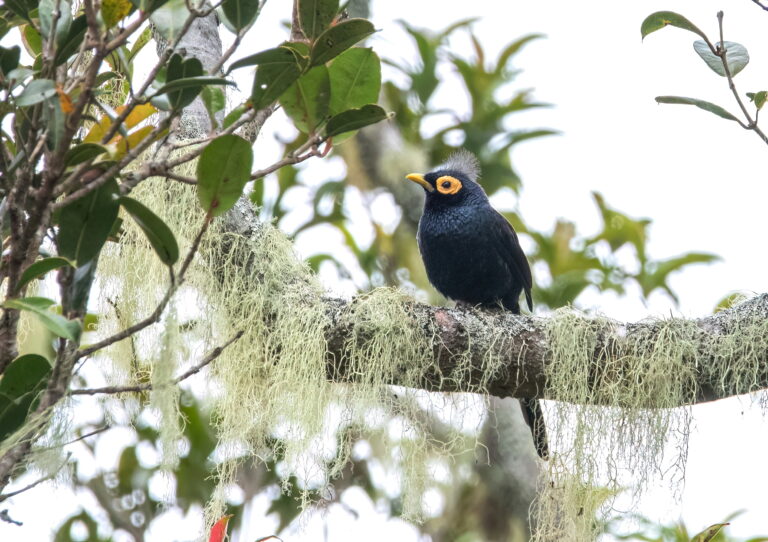
The mountain is alive with over 479 animal species: 53 mammals, 36 herpetofauna, 272 birds, and 118 butterflies. The skies are ruled by the Philippine Eagle (Banug), while the slopes echo with the song of the Apo Sunbird (Aethopyga boltoni), first described in 1905 by explorer Edgar Alexander Mearns. Amphibians like the endemic Mindanao fanged frog (Limnonectes diuatus) add to the mountain’s unique biodiversity, each species a guardian of ecological balance.
Nature and culture
For Indigenous communities, this biodiversity is inseparable from culture. The forests provide food, medicine, and water, while the wildlife embodies peace and continuity. Protecting Mt. Apo means safeguarding both a precious biological heritage and the living cultural heritage of the Bagobo Tagabawa, Bagobo Klata, and Ubu Monuvu peoples.
Field guide
Discover the forest zones, plants, and wildlife that shape the extraordinary biodiversity of Mt. Apo.